

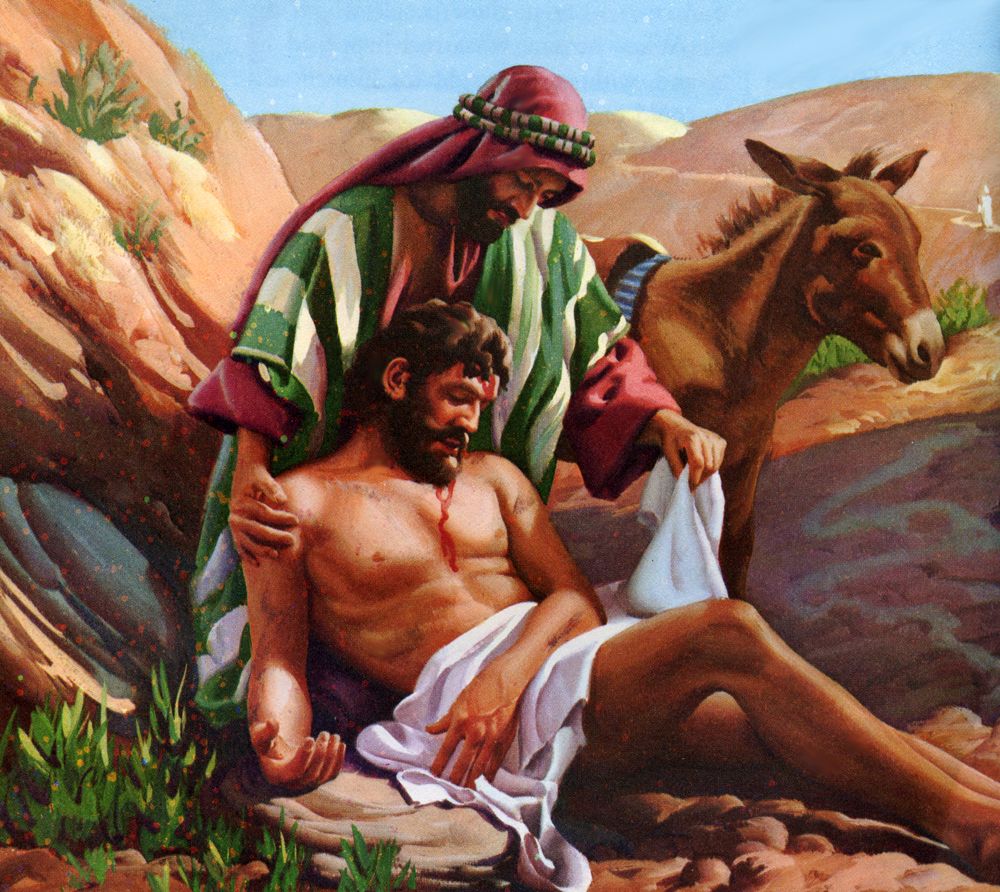
One day, a legal expert asked Jesus a profound question: “Who is my neighbor?” Instead of giving a direct definition, Jesus told a story — a story that would challenge hearts for generations.
A man was traveling from Jerusalem to Jericho when robbers attacked him. They beat him, stripped him, and left him half dead on the roadside.
A priest passed by. He saw the wounded man — and crossed to the other side.
Later, a Levite, a religious worker, came along. He also saw him — and passed by.
Then came a Samaritan.
To understand the impact of this moment, we must remember that Jews and Samaritans had deep cultural and historical tensions. They avoided each other. They distrusted each other. They were divided by prejudice.
Yet the Samaritan did not see an enemy — he saw a human being in need.
He stopped.
He cleaned the man’s wounds.
He placed him on his own donkey.
He took him to an inn and paid for his care.
He promised to return and cover any additional costs.
Compassion moved him beyond inconvenience, beyond risk, beyond cultural division.
Jesus then asked, “Which of these was a neighbor to the man?” The answer was clear: the one who showed mercy.
The Good Samaritan teaches us:
-
Love is demonstrated, not just declared.
-
Compassion requires action.
-
True neighborliness crosses social, cultural, and personal boundaries.
-
Faith is proven in how we treat the vulnerable.
It is easy to be religious. It is harder to be merciful.
The priest and Levite had position, but the Samaritan had compassion. And in God’s kingdom, love is the true measure of righteousness.
When we see someone hurting — physically, emotionally, spiritually — the question is no longer, “Are they my neighbor?”
The real question is, “Will I choose to be one?”